
LAYERED STRESS MODEL
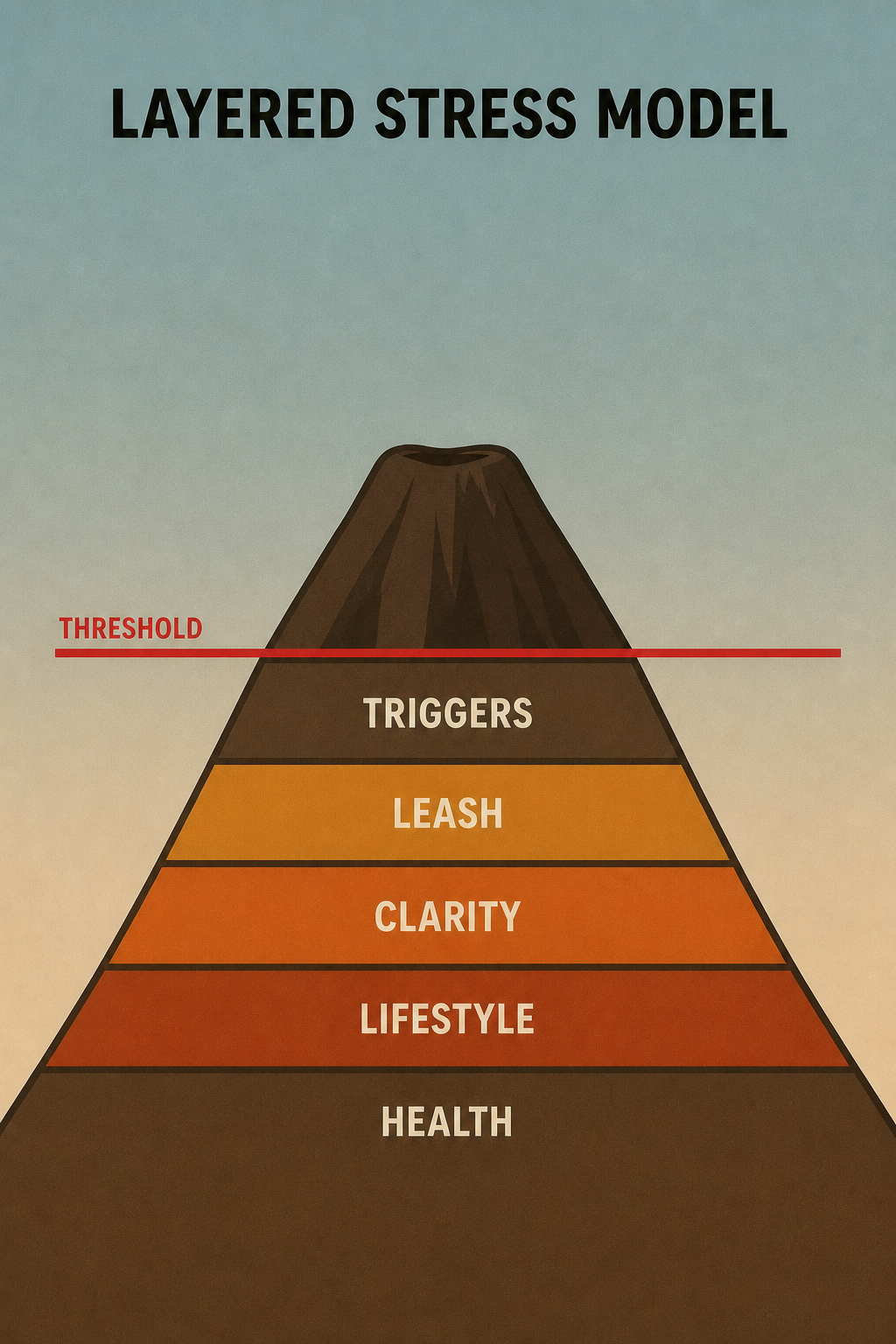
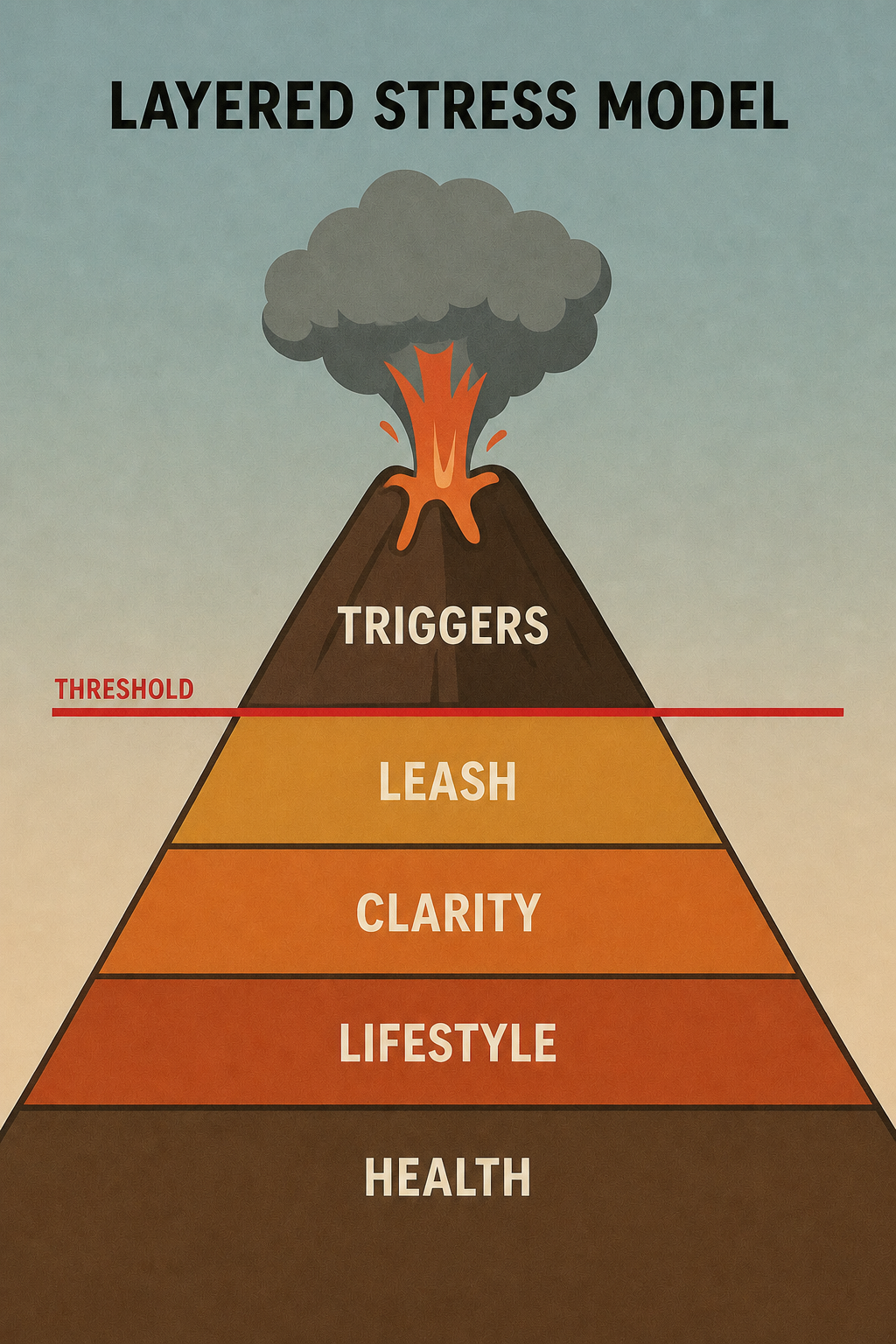
The layered stress model illustrates how cumulative stress from different aspects of life can build over time, eventually causing an individual to react to something in a way that appears disproportionate or unexpected. To an observer, this reaction may seem to come out of nowhere, when in reality it is the result of stress accumulating over time. Let's look at an example to explain this further. Jill is a polite, happy lady who generally is a little shy. Jill was in the supermarket to buy some milk. She goes to the checkout to pay and tries to put the milk in her handbag before leaving. However, she just can’t seem to fit it in. She laughs at first, trying again and again until she has a full meltdown, slamming the milk into bag and bursting into tears. To the cashier serving her, this meltdown appears out of nowhere and seems completely unnecessary. However, what the cashier doesn’t know is what led Jill to have a meltdown in this moment. The night before, Jill had an argument with her husband that ended without resolution. The morning after, Jill wanted to make a bowl of cereal but there was no milk in the fridge. She leaves her house and gets in the car to go to the shop, only to realise she left her purse at home. She goes back home to get her purse, to then stump her toe on the table leg. Once again Jill begins her journey to the shop just to pick up a flat tyre before entering the shop car park. All these aspects of her life have led to a build-up in her stress levels, to the point where she could burst into tears at any moment! So, was it the milk not fitting into her bag that made her have the meltdown? Or was it the fact that Jill didn’t get the chance to blow off/process that pent up stress that accumulated within the 24 hours before? This is concept is pretty well recognised in human beings by other humans. The idea that an over-reaction to something provokes the question of ‘is everything okay?’ But when it comes to our dogs, we do not think of them with the same manner. Sure, a dog who is having a meltdown because they have seen another dog could be doing it whilst having absolutely no accumulated stress, but this is rarely the case. So, what’s the takeaway from this? Often, we can reduce the intensity of a ‘reaction’ or even prevent it from happening entirely by reducing accumulative stress. Knowing where to start is the hard part, which is where the model comes in.
1. Base Layer – Health
This is simple, is your dog suffering with any underlying health issues that may be causing stress? Like anything there is a scale for how serious the issue can be, for example unidentified hip dysplasia is going to be causing a lot more pain (therefore stress) than your dog being overweight. Making sure we are aware of health issues, being mindful of how they may be affecting our dog, helping them recover/heal. We understand that this may seem kind of obvious to most people, but it is often overlooked. So, especially when your dog has a sudden change of behaviour, we need to make sure they’re healthy. If for some reason the dog is suffering with health issues and this is not identified, training protocols are at least going to be affected and may not work at all! Regular massages and stretches after exercise/play will help monitor your dog in this sense.
2. Lifestyle – Is your dog fulfilled?
Dogs, humans, cats, every being is born with an innate biological or genetic drive to express certain behaviours. Think of Collies and their drive to herd. Cats and their desire to hunt. How much tolerance a being has for not doing what they naturally desire varies dramatically, for example you might have two Bloodhounds, both obsessed with using their noses, however one dog may seem to cope better than the other when scent work/games are not available for long periods of time. When we get a dog, we should investigate what activities give it a sense of fulfilment, and we should find ways to provide them with an outlet to perform such activities. Not doing so may provoke the dog to find their own way to express their needs, which can often lead to problems. The Collie who isn’t given an opportunity to herd, may start herding the children or other animals of the house. You may not be able to provide that Collie with herding work, but you may be able to find surrogate activities that scratch that itch for the dog, for example playing with a herding ball, or doing some obedience/agility.
3. Clarity – Knowing what is expected
This goes beyond making the rules clear, although that is a good start! When we talk about giving the dog clarity, we’re talking about making them aware of how we expect them to behave in different environments and situations so that they can navigate the world successfully without stress. Every being needs a different amount of clarity to avoid the feeling of stress. For example, if you and your partner are going out for dinner with a group of friends, you may be okay with just going with the flow and not knowing details, however your partner may need to know where you're going, how long for, who is going with you and what's the dress code? Otherwise, they’re going to feel a little stressed. Once they know the details, they feel better for it and they can think clearly. Structure is a great way of providing clarity to a being who can’t find it, for example there are people out there who love their everyday work routine, but when it comes to the weekend, or taking a holiday, they find themselves feeling a little lost. For others however, structure is not as important. Some dogs may need to have a little structure put into their lives in order to find clarity, but most will become dependent upon that structure if we don’t ween them of it, teaching the dog how to cope when there is no structure.
4. Lead – Communication not restriction
The lead can be the biggest source of frustration in your dog's life, or it can be completely neutral. Let's be realistic here, no dog is ever going to say ‘hey, put that lead on me I love it!’ But if we are thoughtlessly putting a lead on a dog, taking them out for their walk, taking of the lead when we get home and that's their only experience with the lead, we can create a series of problems. The first being the pattern we are creating. Every time the lead comes out, we go for a walk. So now, if the dog enjoys the walk enough, we have got an excited dog. If the dog hates the walk for whatever reason, the lead becomes a signal to feel anxious/unhappy. Either way, having these feelings and behaving well generally don’t go together. The solution seems obvious right? We put the lead on from time to time and do absolutely nothing, sometimes having obedience/play sessions instead. But that doesn’t help the next problem. Once we step outside for our walk, the dog will inevitably hit the end of the lead, which is where the next problem starts. For some, the restriction may cause panic. For others it may present a challenge. And what's even more of a problem is that without any intervention from the owner, the dog will get used to it.
5. Triggers – The problem behaviour
This is where I'll take you back to the example of Jill and the milk. The problem behaviour? Having a complete meltdown! The trigger? Not being able to pack away her milk. If we just look at the incident in isolation, we may conclude that Jill is a complete psychopath. But when we look a little deeper, we know there is much more to the story, and that accumulated stress was the actual cause of the outburst. Now let's talk about dogs! When we think of a ‘reactive’ dog, we may picture a dog who is lunging, barking and snapping at other beings as they appear/pass by. Unlike our example of ‘Jill’, we can’t just ask a dog ‘is everything ok?’. Instead, we look at the aspects of the dog's life that may be causing it some underlying stress, and we do our best to improve them. Every dog has a different threshold for pain. Every dog has an activity that makes it feel fulfilled. Every dog needs a different level of clarity in order to function properly. And every dog has a different way of seeing the lead depending on their previous experience with the tool. Once we tick off each aspect of the layered stress model, we can then revisit the ‘trigger’ and see how the dog responds. In most cases, the behaviour that was initially the problem is much milder. In some, the behaviour has completely disappeared. Rarely is there no difference in the dog's behaviour. Either way, by going through this process, making sure we have a healthy, fulfilled dog who understands our communication system and accepts the lead for what it is, we will have acquired all the tools necessary to stop the behaviour in its entirety.